Occupational Therapy

  • Home
  • Occupational Therapy

Occupational Therapy

Occupational therapy helps children gain independence while also strengthening the development of fine motor skills, sensory motor skills, and visual motor skills that children need to function and socialise.

Children may require occupational therapy with or without the presence of a medical condition. Kids with the following medical conditions are considered to be ‘at risk’ for delays in skills impacting participation in home and school environments.
  • birth injuries or birth defects
  • sensory processing disorders
  • traumatic injuries (brain or spinal cord)
  • learning problems
  • autism/pervasive developmental disorders
  • behavioural problems
  • developmental delays
  • post-surgical hand conditions
  • spina bifida
  • cerebral palsy and other chronic illnesses

Occupational therapists help children develop independence in the following areas:

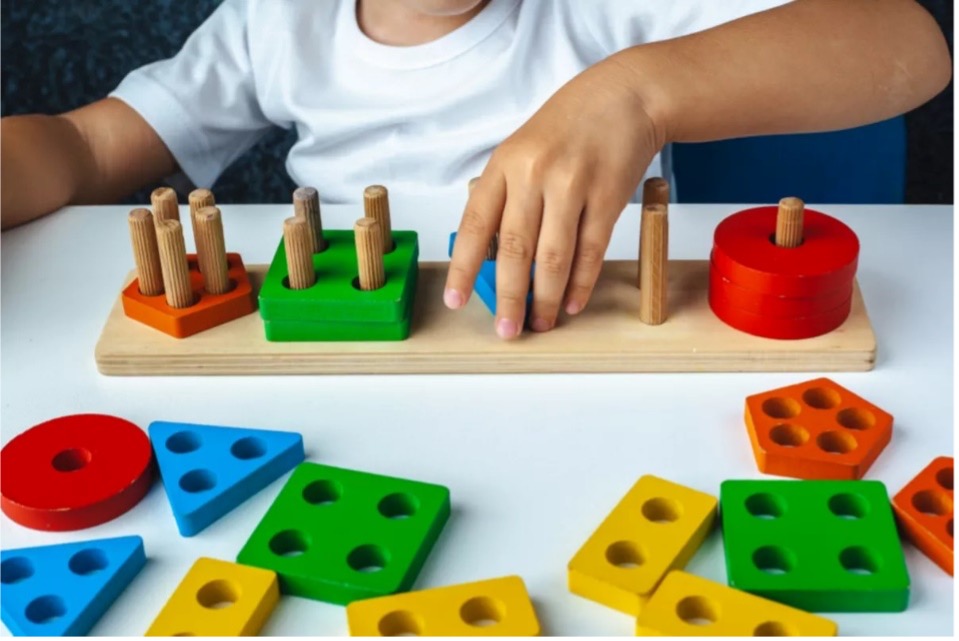
  • Fine Motor Skills:  refers to the coordination of the small muscles in the hand to hold, explore, manipulate toys, pencils, markers and feeding utensils. Fine motor skills are imperative in mastering school readiness goals such as handwriting, cutting and craft.
  • Gross Motor Skills: refers to the abilities required of the large muscle groups to achieve movements such as running, jumping, walking, kicking and throwing.
  • Handwriting: handwriting skills are dependent on the development of three primary areas: fine motor coordination, manual dexterity and visual motor skills. Handwriting difficulties that may emerge may include: disorganised handwriting, fatigue and pain, letter reversals, pencil pressure and legibility.
  • Self-care skills: involves dressing and undressing, morning and afternoon hygiene routines, tying laces, fastening buttons and toileting.
  • Play skills: refers to skills used in everyday play such as imagination, role play, building, threading and puzzles

Other concerns that Occupational Therapists can assist with:

  • Therapy for sensory processing difficulties
  • problems with executive functions (including planning and organising)
  • problems with ​Attention/ Concentration (staying on task)
  • teach children to participate in routines
  • teach problem-solving skills
  • Strategies to best support behaviour
  • School Readiness skills & more.

Ultimately, the goals are participation in meaningful activity, developing the skills that are important for success at school, and achieving a quality of life by reaching their full potential.

Request an Appointment

To enquire about occupational therapy for your child, use our appointment form and select your preferred branch: TTDI or USJ / Subang Jaya.

Tell us about your concerns so our team can help you enquire about the appropriate appointment. We will confirm service availability, fees and any preparation needed before your appointment.

Request an Appointment

TTDI: Call 013 518 8285 · WhatsApp TTDI
USJ: Call 019 395 8285 · WhatsApp USJ